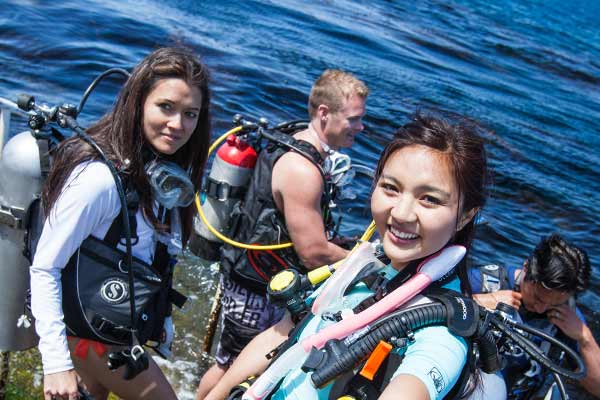

Scuba diving has a pretty unique training and certification model.
A beginner can earn a globally recognised Open Water certification in just a few days. That card is valid worldwide and never expires. Show it at a dive center in Thailand, Egypt, or Mexico, and you’re on the boat.
Most training agencies are commercial organisations (PADI, SSI) that clearly benefit from keeping courses short, accessible, and appealing to as many people as possible.
There are non-commercial organisations too (BSAC, CMAS, NAUI), but their commercial success indicates that consumers clearly prefer the faster route to certification that commercial agencies offer.
All these organisations are represented in the World Recreational Scuba Training Council. The WRSTC sets the shared ISO standards for diving courses. These standards are the minimum requirements that every dive course has to meet.
And the safety record backs the system up. Scuba diving has a relatively low accident rate compared to the number of people who participate. The model works. It has worked for decades.
And yet, there may be some changes on the horizon.
Recent dive accidents and the lawsuits that followed have triggered Divers Alert Network (DAN), one of the most influential diving insurance organisations, to enter the legal discussion. DAN has openly questioned who ultimately bears financial and legal responsibility when something goes wrong. Are diving agencies only responsible for creating the standards? Or are they also responsible for ensuring those standards are actually followed? Read more about this lawsuit here.
Don’t understand this wrong. DAN isn’t suing PADI, NAUI, or any training agency for damages. But it’s asking questions that the industry has been happy to leave unanswered. To put this in context, it helps to look at how scuba diving’s model compares to other adventure sports. Because there are some interesting differences.
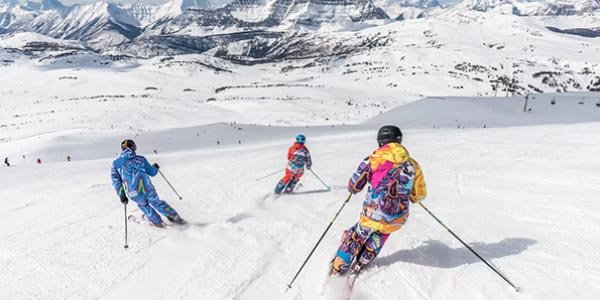
Skiing: open access, terrain as the judge
Walk up to any ski resort in the world. Rent gear, buy a lift pass, ride to the top. Nobody checks anything. Recreational skiers need no certification, no card, no prior experience. The mountain enforces its own standards. If you can’t ski, you’ll find out fast.
Ski resorts do have a well-developed instructor certification system, run nationally by bodies like PSIA in the US, BASI in the UK, and CSIA in Canada, all connected internationally through the International Ski Instructors Association. Instructors progress through four levels. But that entire structure exists for professionals only. The recreational skier faces no gate at all. When something goes wrong on the slopes, liability falls primarily on the individual. The resort’s responsibility is to maintain safe terrain, not to verify the skier’s competence.
This is the sharpest possible contrast with scuba. The dive center checks if you’re certified before you get in the water. The ski resort sells a lift pass to anyone with money.
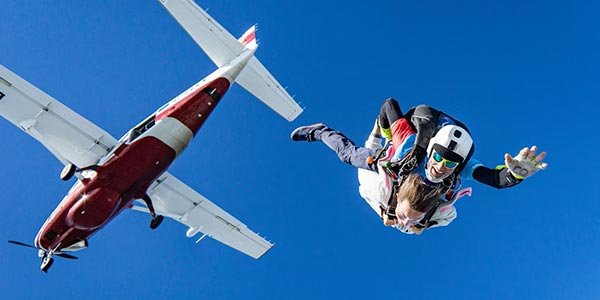
Skydiving: the most rigorous pathway of any sport here
If you want to jump out of a plane solo, you’re looking at 6 to 8 hours of ground school before your first jump, covering equipment, emergency procedures, body position, and canopy control. Your first jumps are made from around 4,000 metres with two instructors physically holding onto you in freefall. Full solo independence requires a minimum of 25 jumps, plus written and oral exams. That earns you a USPA A License.
And unlike a scuba card, that license has currency requirements. Lapse for 60 days and you need a supervised jump before going solo again. The system checks that you’re still current, not just qualified.
The organisation behind all of this, the USPA, is a nonprofit, member-elected body with formal recognition from the Federal Aviation Administration. The FAA can fine, suspend, or revoke credentials when things go wrong. There is real government oversight, and legal responsibility is clearly distributed across a regulated framework. Nothing equivalent exists for recreational scuba.
To become a skydiving instructor is an entirely separate, demanding process built on top of an already substantial foundation of jumps and experience. You don’t teach before you’re deeply competent yourself, and the system makes that difficult to shortcut.
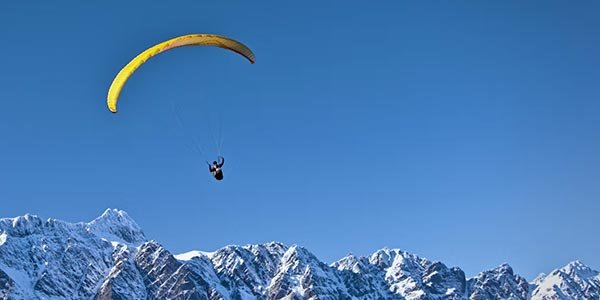
Paragliding: the closest model to scuba
Of all the sports in this comparison, paragliding mirrors scuba most closely in how it handles student access.
Most flying sites require pilots to show a rating before they’re allowed to fly. No card, no access. To reach P2, the level that allows solo unsupervised flight in the US, you need a minimum of 7 training days and 35 supervised solo flights, plus a written test. That’s considerably more demanding than a three-day open water course with four dives. The site operator acts as the gatekeeper, and they can watch you launch and simply decide you’re not fit to fly that day. That kind of real-time discretion doesn’t really exist in diving once the card is issued.
Tandem flights are available for anyone who wants a taste. But to be the tandem pilot, you need a P4 rating, at least 200 hours of airtime, and a separate tandem certification. The bar for taking a passenger is very high. And the organisation running all of this, USHPA in the US, is a nonprofit governed by elected members. The people who built the sport govern it. Compare that to diving, which is run by privately owned companies, where dive professionals have no seat at the table when standards are set.
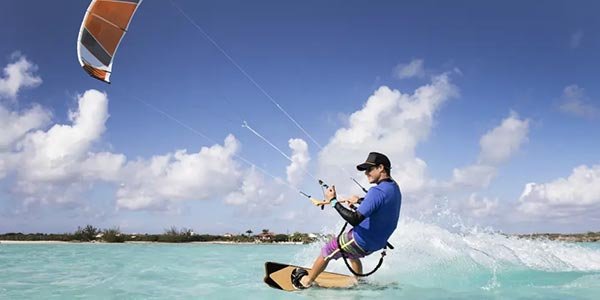
Kitesurfing: a familiar card, inconsistent enforcement
Kitesurfing has a global card system that looks similar to scuba on paper. The IKO runs ratings from Level 1 through Level 4, and most beginners reach an independently rideable level after around 9 to 12 hours of instruction. The card is recognised at rental shops and beach management areas worldwide.
But you don’t legally need it to kitesurf. Some busy spots check it. Many don’t. The card functions more like a social passport than a hard gate, and enforcement is patchy at best. When accidents happen, the legal picture gets complicated quickly, partly because responsibility is never clearly established in advance.
The IKO is a private commercial organisation, earning revenue from school affiliations and certification fees. The business model looks familiar. The accountability structure does not.
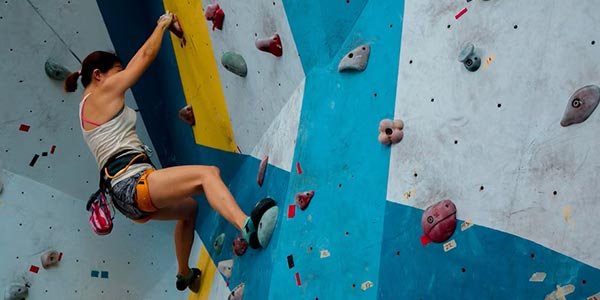
Rock climbing: two parallel systems
Rock climbing operates differently depending on where you are. At an indoor climbing gym, roped climbing typically requires a belay certification. You take a short test, the gym certifies you, and you can use the ropes unsupervised. The card is checked. The model is gate-controlled.
Outdoors, there is no equivalent. Any public crag is open to anyone. Commercial guide services must employ certified staff, but individual climbers face no requirements at all. Two parallel systems running side by side, one with a clear gatekeeper and one with none.
Where scuba stands apart
Looking across all of these sports, a few things about scuba become more obvious.
One is that a single PADI instructor can certify a student entirely on their own authority. They can work independently, on a boat, at a resort, at a lake, anywhere. Your certification, and everything behind it, rests on one person’s judgment on a specific day. In skydiving, drop zone staff physically observe your skills at each jump. In paragliding, site operators watch you launch. In scuba, once you have your card, it’s trusted permanently and universally by strangers who never saw you in the water.
That trust is the foundation of the whole system. But the system has no mechanism to distinguish a carefully certified diver from one who was rushed through in three days under a fatigued instructor at a budget operation.
The card also never expires. The certification you earned twenty years ago, after four open water dives, is legally identical to one earned last month. Dive centers accept it without question. No other sport here does this. Skydiving has currency requirements. Paragliding sites expect recency. Aviation licenses expire. Dive training agencies offers a voluntary refresher or ‘ReActivate’, but it’s completely optional.
And then there’s the depth limit. Open Water certification formally limits divers to 18 metres. In practice, nobody checks this. Diving accident reports clearly show that ‘exceeding training limits’ is a major cause of diving accidents. Skydiving doesn’t allow that kind of drift. You either have the license for what you’re doing, or you don’t. In scuba diving, the limit is written on the card, but the only check is the dive center that accepts it, and dive centers compete heavily with the shop next door.
So is the system good or not?
Honestly, I think it’s both.
Scuba diving has built the most globally consistent, commercially enforced, self-sustaining certification system of any recreational adventure sport. A card issued in Brazil is accepted in Malaysia. That’s a genuine achievement. The minimum standards set by the WRSTC and ISO are real, and when followed properly, they produce competent, safe divers.
But the gaps are real too. The three-day timeline is short for an activity conducted in an environment that will kill you if something goes wrong. The card never expires. Instructor quality varies enormously, and no agency can realistically verify that every student who gets certified actually met the course requirements. Price competition in tourist destinations creates pressure to cut corners. And the organisations setting the standards are commercial enterprises, not the member-governed bodies that run skydiving and paragliding.
None of this makes scuba diving unsafe. The sport’s safety record has been good for a long time. But the recent legal actions have created a moment where the industry can no longer avoid the harder questions.
What the DAN case may change
DAN taking this to federal court is a big deal. It’s not a quiet settlement behind closed doors. It’s a public legal action about an important question: when standards exist but aren’t followed, who is actually responsible?
To make it clear, DAN isn’t suing PADI, NAUI, or any training agency for damages. But it’s asking questions that the industry has been happy to leave unanswered. If agencies write the standards but have no obligation to proactively check whether these standards are being followed, where does the liability land? Who is ultimately resposible? The instructor? The dive center? The agency that certified both?
This isn’t really about one accident. It’s about whether our requirements to become a diving instructor are strict enough, whether one instructor managing multiple students at once is actually reasonable, and whether commercial pressure quietly shapes what happens underwater when nobody is watching.
Those are questions that every scuba instructor and dive professional should be thinking about right now. What’s your take? Should requirements to become an instructor be higher? Should the certification model change? Should insurance companies have a say in training standards?
I’m genuinely interested to hear opinions from dive professionals and professionals from other action sports!