
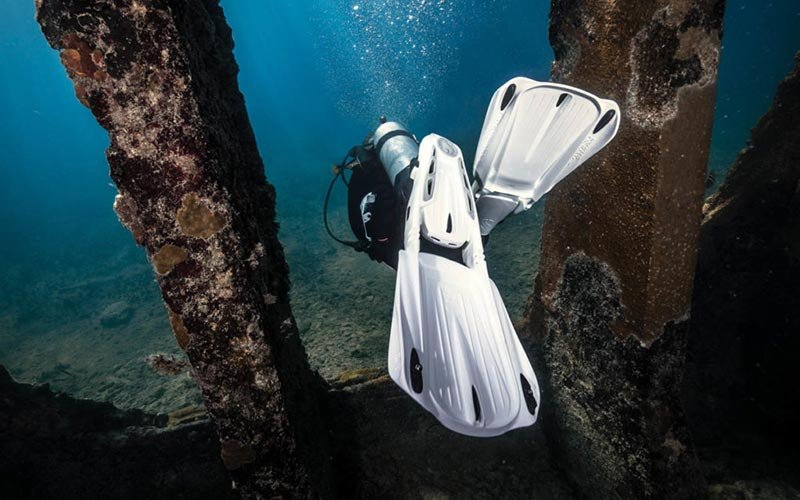
Every time I start a PADI IDC course, it’s a surprise to see what equipment candidates show up with. Some arrive with gear perfectly suited for professional diving. Others struggle through the first pool sessions with equipment that is completely unsuitable for the job.
I’ve seen instructor candidates cramping up during a simple demo session because they’re wearing huge, ultra-stiff fins, and I’ve watched candidates trying to keep their ultra-long freediving fins off the bottom while hovering. Some show up with a complete tech diving kit, suitable for cold water. Others are planning on using fins and a mask that I would not use for snorkeling.
As a dive professional, your fins are one of the most important pieces of equipment. They’re your work equipment. Your tools. You need fins that allow you to teach in the pool and open water, can handle the abuse of being hauled around in equipment crates or bags, and that also work in different conditions if you decide to work in a different location.
So let’s talk about fins and let me share my personal opinion on what actually works based on my experience in 20 years of teaching divers and instructors.
Why Professional Diving Needs Different Fins
When you’re teaching, you’re doing things that most divers never do. You’re kneeling down in the pool or at a sandy bottom while demonstrating skills. You’re swimming on your back or dragging some DSD participants through the current. And you’re doing this day in and day out.
This isn’t about looking cool or following trends. It’s about having fins that won’t fail you when you’re responsible for other people’s safety and enjoyment underwater. Reliability should be your main concern when choosing your fins. Simple paddle fins with medium to stiff blades are reliable and a popular choice for dive professionals. Consider the Scubapro Jet Fins, Hollis F1s, or Deep 6 Eddy fins as your options.
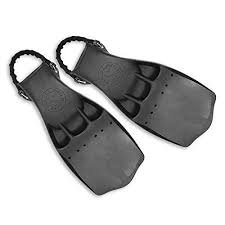
Scubapro Jet Fins
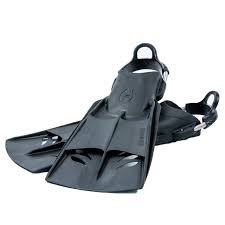
Hollis F1s
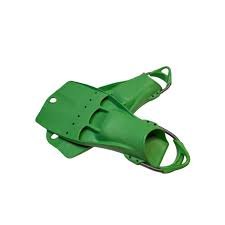
Deep 6 Eddy fins
Tropical Water Guiding and Teaching
Guiding in warm tropical waters seems like it should be easier on your gear, but you’re often doing three dives a day, every day, for months. The heat and constant sun exposure will break down materials faster than you’d think. Your fins need to be extremely durable.
Full Foot Fins
Full foot fins are an option, and some instructors prefer them. They’re lighter, easier to pack when you’re moving between resorts or liveaboards, and they’re what your students will probably be wearing. Just make sure they fit perfectly. If they don’t, your fifth dive of the day can become pretty painful.
They’re also cheaper than open heel fins but they don’t last as long. When you put them on and take them off 3 or 4 times per day, sooner or later, the foot pocket will tear.
For tropical professional diving, consider Cressi Reaction Pro, Mares Avanti Superchannel, or Aqualung Stratos for full-foot options.
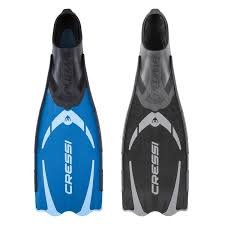
Cressi Reaction Pro
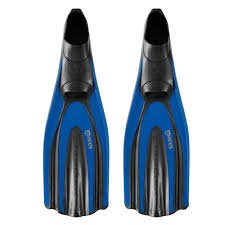
Mares Avanti Superchannel
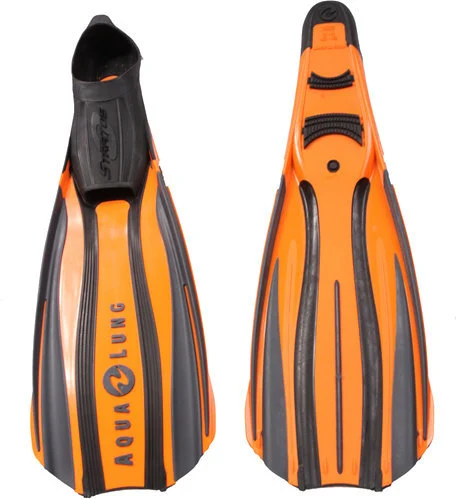
Aqualung Stratos
Open Heel Fins
Open-heel fins with light booties are the most popular choice for instructors. They’re comfortable and easy to put on and take them off. You’re not walking around barefoot after taking them off.
For open heel tropical diving, look at Mares Avanti Quattro Plus, Scubapro Go Sport, or Apeks RK3.
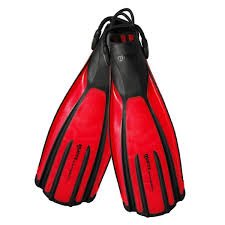
Mares Avanti Quattro Plus
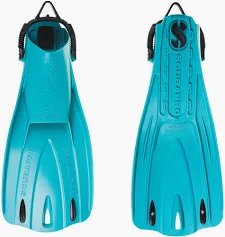
Scubapro Go Sport
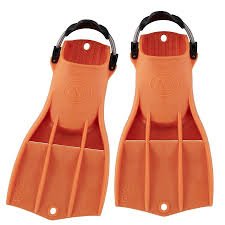
Apeks RK3
Straps
Consider this: you’re helping your students to gear up and get in the water, so you’re probably not wearing your fins. Then you quickly want to jump in yourself. Or you’re hanging on the back of the boat in choppy water, trying to take your fins off.
Fin straps are important. Quick-release buckles are great because they are adjustable. You can use them over different bootie thicknesses (in case you are diving in different locations). However, in my experience, it is the first part of your fin that breaks. Most quick-release buckles can be bought separately so you can replace them if needed.
More and more fins are only available with spring straps. Good spring straps are my first choice because they last. Their disadvantage is that they can not be tightened during a dive, and they can’t be adjusted if you’re changing booties.
Fins with quick-release buckles: Mares Quattro Excel, Aqualung Stratos, or Cressi Frog Plus.
Fins with spring straps: Apeks RK3 HD, OMS Slipstreams, or Dive Rite XT.
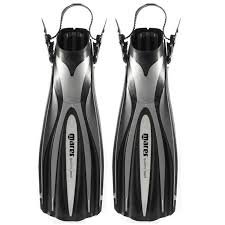
Mares Quattro Excel
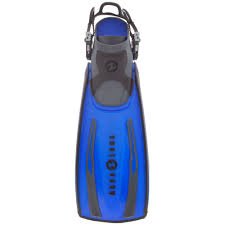
Aqualung Stratos Open Heel
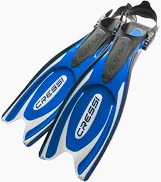
Cressi Frog Plus
Fin Weight and Buoyancy—Where Many New Instructors Go Wrong
This is where I see many new instructors make a bad choice. Struggling with your buoyancy makes it difficult to teach and demonstrate skills properly. You need to be perfectly trimmed and stable in the water to show students what good diving looks like.
Heavy fins make your legs sink. Light fins make them float up. Both situations throw off your trim and make you work harder to maintain position. When you’re trying to demonstrate mask clearing while hovering you don’t want to be fighting your fins.
But it’s not just about the fins themselves. It’s the combination of booties plus fins that matters. Are you wearing thin 3mm tropical booties or thick 7mm cold water boots? That makes a huge difference. Even your wetsuit or drysuit affects your choice in fins. A thick drysuit adds a lot of buoyancy to your legs and feet, so you might need heavier fins to compensate. A thin wetsuit or just a rash guard means you probably want lighter or neutral fins.
Most fins on the market are neutral or near neutrally buoyant, which works fine for most diving. But as a professional, you need to think about your complete setup. I’ve seen instructors wearing heavy Jet Fins with thin booties and a 3mm shorty, and they’re constantly fighting to keep their legs from sinking. I’ve also seen the opposite—instructors in thick wetsuits wearing light travel fins, and their legs float up behind them like balloons.
Examples of extremely light fins include the Scubapro Go Travel, Cressi Pro Light fins, and Cressi Frog Plus fins. These are positively buoyant and will make your legs float up, which can be a problem if you’re already wearing buoyant gear.
On the heavy end, you have Scubapro Jet Fins, Hollis F1 (original version), and OMS Slipstreams. These are negatively buoyant and will pull your legs down. They’re perfect for drysuit diving or when you’re wearing thick neoprene boots, but they can be too much if you’re diving in minimal thermal protection.
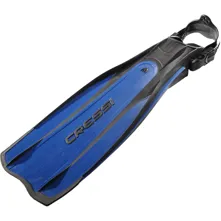
Cressi Pro Light
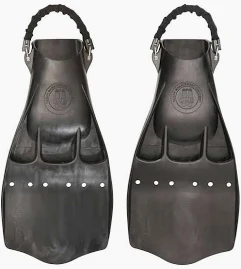
OMS Slipstream
Cold Water Professional Diving
Teaching or guiding in cold water—local lakes, diving sites where you’re wearing a drysuit or thick wetsuit—requires specific fin characteristics. You need fins that are negative or at least neutral to counter the buoyancy of thick neoprene boots and suits. This is absolutely necessary for maintaining proper trim.
Heavy paddle fins work great here. Yes, they’re chunky and not great for travel, but when you’re teaching in cold water, wearing a 7mm wetsuit and boots, you need that negative buoyancy. The weight also provides better feedback for teaching proper kicking technique. Students can see exactly what you’re doing because your movements are clear and controlled.
For cold water professional use, look at Hollis F1 LT (lighter version), Apeks RK3 HD, or OMS Slipstreams.
Teaching Proper Finning Technique
You cannot teach good buoyancy control without teaching proper finning. You cannot teach proper finning technique if you are struggling yourself. This is important during your IDC and even more important when you’re teaching students.
Students learn by watching you, and they need to see clear, easy-to-follow movements. Medium-stiff paddle fins provide the best platform for teaching. They’re stiff enough that students can see exactly what your fins are doing during a frog kick or flutter kick demonstration. They’re forgiving enough for making long dives without exhausting yourself.
Split fins are terrible for teaching. You can’t effectively demonstrate frog kicks, back kicks, or helicopter turns with split fins because they’re designed for flutter kicking only. They have very low resistance when finning, so they may be a good solution for divers with knee problems, for example.
Some good examples of medium sized, medium stiff fins that are suitable for teaching finning technique specifically: Deep 6 Eddy fins, Mares Quattro, or Scubapro Jet Fins.
Handling Strong Currents
As a dive professional, you don’t get to skip the dive because there’s current. If clients paid for a dive, you’re taking them diving. This means you need fins with real power when conditions get challenging.
I worked in locations where almost every dive has current. Preferably, you drift with the current, but there are always moments when you need to push against it. Soft, flexible fins won’t work. You need medium to stiff blades with a good surface area. You need to be able to do your job when you’re responsible for keeping a group together in challenging conditions.
Current diving also shows any weaknesses in your fins’ construction. That’s where composite fins—fins that are made from a combination of flexible and stiff materials—often fail. The connection between materials will separate sooner or later. Mono-material fins are simply more durable because there are no weak points.
For current diving and demanding professional use, rely on Apeks RK3 HD, Scubapro Seawing Nova, or Hollis F1s.
The Professional’s Choice
There’s no single “best” fin for all dive professionals. Your choice depends on where you work, what conditions you face most often, and what feels right for you. Your choice is personal, and you need to find what works for your specific situation.
That said, instructors and divemasters who stick with this career long-term—the ones still teaching and guiding after 10 or 15 years—almost all end up using simple, medium to stiff paddle fins with spring straps. Not because someone told them to, but because they have lasted thousands of dives.
The common theme is durability. When diving is your job, you can’t afford fins that break after a season.
For us, fins are work equipment, not vacation gear. Yes, quality fins cost more upfront. But when you calculate the cost per dive over years of professional use, they’re actually the budget-friendly choice.
Find fins that match your primary diving conditions, make sure they fit your complete gear setup, and prioritize durability over fancy features. The best fins for professionals are the ones that you don’t think about, and let you focus on your students and divers.