I’ve done thousands of dives, and I still get excited when I see a reef covered in soft corals. Those pink and red ones swaying in the current, the purple sea fans, the bright yellow tree corals – they’re absolutely beautiful.
But here’s what I’ve noticed: most divers don’t really understand what they’re looking at. They think soft corals are plants, or they assume they work the same way as hard corals. Neither is true.
Here are 10 interesting facts that you can share with your divers about these fascinating creatures.
They’re Not Actually Soft
Soft corals don’t have the hard calcium carbonate skeleton that hard corals build, but they’re not just squishy blobs either. Inside their tissue, they have thousands of tiny structures called sclerites – basically microscopic pieces of spiky armour that give them structure and make them taste terrible to fish.
The tissue itself can be quite firm when the coral is fully inflated. It’s only “soft” compared to the rock-hard skeletons of reef-building corals.
They Use Water Like a Skeleton
Soft corals have what’s called a hydrostatic skeleton – they use water pressure to maintain their shape and stand upright. Think of it like a water balloon. When it’s full, it’s firm. When it’s empty, it collapses.
They pump seawater into their tissues when they want to extend and feed, and release it when they want to contract. It’s remarkably efficient and allows them to change their shape depending on conditions.
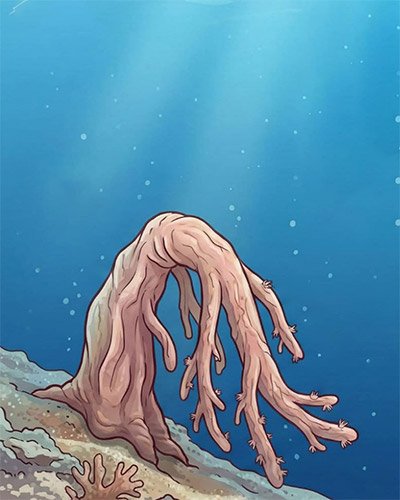
The Deflated Ones Aren’t Dying
This is something I explain to Open Water students constantly. They see soft corals lying flat and worry something’s wrong.
Nothing’s wrong. Those corals are just resting.
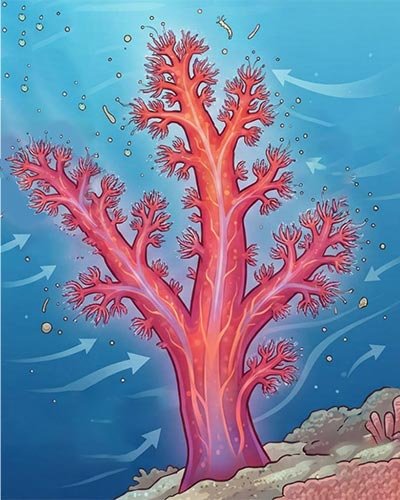
Soft corals inflate when there’s current bringing food, and deflate when the water’s still. Why waste energy standing up if there’s no food coming by? You’ll often see the same colony fully extended in the morning and completely deflated by afternoon. It’s normal behaviour.
Soft coral resting
Soft coral feeding
Most Actually Have to Hunt for Food
Unlike many hard corals that get most energy from symbiotic algae using sunlight, many soft corals – particularly those pink and red ones – don’t have this option.
They’re suspension feeders. They wait for current to bring plankton and organic particles, then catch this food with their tentacles. No current means no food delivery.
This is why soft corals are often more abundant in areas with good water flow. Some species do have symbiotic algae, but they’re not as dependent on sunlight as hard corals typically are.
They Don’t Build Reefs
Hard corals create the reef structure. Soft corals don’t do this. But that doesn’t make them less important.
Soft coral colonies provide habitat for fish, invertebrates, and countless other creatures. They grow fairly slowly – maybe two to four centimetres per year – but over time can cover large areas and create their own distinct ecosystems.
They Come in Incredible Colours
Red, pink, purple, yellow, orange, white – soft corals are ridiculously colourful. Part of this comes from pigments in their own tissues, and part from the symbiotic algae some species host.
The colours aren’t just pretty. They often serve purposes like protecting the coral from UV radiation or attracting symbiotic organisms.
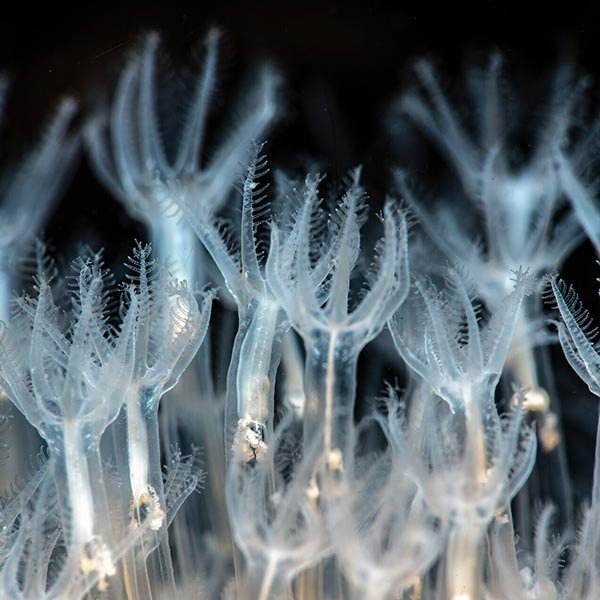
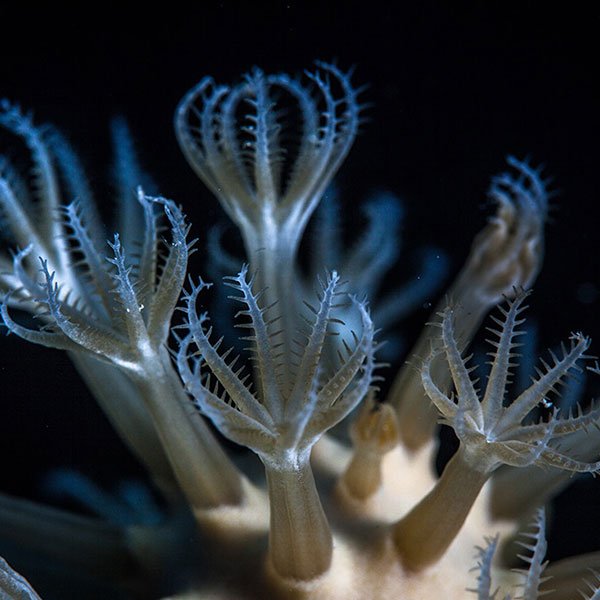
Each Polyp Has Eight Tentacles
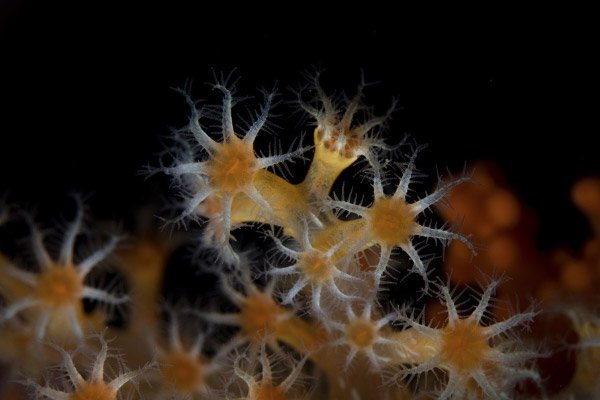
This is how you can tell soft corals from hard corals. Soft coral polyps always have eight tentacles. Hard coral polyps have six or multiples of six.
The polyps themselves are tiny – often just a millimetre across. But a soft coral colony contains thousands of these polyps all connected and working together. When you touch a soft coral (which you shouldn’t), you’re affecting thousands of individual polyps.
Some Live in Extreme Depths
While the soft corals you see while recreational diving are in warm, shallow water, some species live in incredibly harsh conditions. Deep-water soft corals can be found at depths exceeding 3,000 metres, in complete darkness and near-freezing temperatures.
These deep-sea species remind us how adaptable corals can be when they’re not stressed by human impacts.
They Reproduce Multiple Ways
Soft corals can reproduce sexually, but they can also reproduce asexually. If a piece breaks off during a storm, it can settle elsewhere and grow into a whole new colony.
Some species are incredibly good at this. In certain locations, soft corals have essentially carpeted the seafloor through this fragmentation and regrowth. This resilience is valuable, but it doesn’t make them invulnerable to warming water or pollution.
They’re Affected by Bleaching Too
Coral bleaching affects soft corals just like hard corals. When water temperatures rise even slightly – just 1°C above normal for a few weeks – the symbiotic algae inside corals get stressed and leave. The coral loses its colour and its primary food source.
For soft coral species that depend on these algae, bleaching is serious. They can starve if temperatures stay elevated too long.
Bleaching events are happening more frequently now. What used to occur once every few decades now happens every few years in some locations. Some soft coral species are more resilient than others, but overall, rising ocean temperatures are a genuine threat.
What You Can Do
When you’re diving, practice good buoyancy control. Don’t touch corals – even gentle contact can damage tissue. Use reef-safe sunscreen.
Beyond that, support climate action. The biggest threat to corals globally is ocean warming, and that requires addressing carbon emissions. I know that sounds political, but it’s just reality. If we want future divers to experience these creatures, we need to take ocean warming seriously.
Understanding soft corals better makes diving more interesting. You’ll notice things you previously overlooked and appreciate the diversity of life on the reef.
Next time you see those pink soft corals swaying in the current, you’ll know exactly what you’re looking at – and why they’re worth protecting.