Traveling and Working as a Diving Instructor in Asia – Is It Possible?
If you’re a PADI Divemaster wondering whether you can actually turn your love for diving into a traveling career across Asia, the short answer is: yes, it’s possible. But let’s be honest—it’s not quite as simple as grabbing your fins and hopping from island to island whenever you feel like it.
It’s one of the most common remarks I hear during the IDC; “I just want to travel and work a bit”.
Working as a diving instructor while traveling through Asia can be a great lifestyle, and it is possible. If you approach it in a professional way.
Finding Work After Your IDC
Once you’ve completed your PADI Instructor Development Course and passed your Instructor Exam, the first question is: how do you actually find a job?
The answer is less complicated than most think. The best way to find diving instructor work is simply to walk into dive centers in person. Bring your resume, introduce yourself, and have a chat with the dive center manager or owner. Many positions are filled before they’re ever posted online, and dive centers want to meet you face-to-face before they trust you with their students. Hiring somebody who is standing in front of you is much easier than hiring somebody who wrote you an email.
You don’t have to figure this out alone. When you complete your IDC with Asia Scuba Instructors, we actively help you get your career started. We have connections with dive centers across Asia, and we know which ones are looking for instructors. We can also give you honest advice about which locations and dive centers are good fits for newly qualified instructors.

What Dive Centers Actually Expect
Here’s a reality check: Dive centers are professional organizations that need professional staff. They’re not looking for somebody who wants to teach a few courses for fun. Even if you offer to do it for free.
This is a real job, not an extended holiday with occasional teaching. Dive centers are businesses, and they need instructors who take the work seriously. The good news? If you’re willing to commit and be professional, doors will open.
Most dive centers are looking for instructors who can commit to at least a full season—typically 3-6 months. Some will ask for longer commitments, especially if they’re investing in your work permit and visa.
Freelancing is a good option, and many instructors are able to make that work. You’ll be responsible for your own paperwork, and you’ll need to pay for that yourself.
What Makes You More Employable as a New Instructor
Most dive centers won’t throw new instructors into the deep. You’ll have to learn their logistics, how to pack equipment, get to know the dive sites, etc. If you’re willing to commit for a full season, they will invest more time to get you started.
However, PADI courses have the same skills and standards in every dive center worldwide. You need to know what to teach and how. You need to be able to make courses fun and keep your students safe. These are basic instructor skills that you should have picked up during your Divemaster course and IDC.
All the experience you can show is useful and makes you more employable. Do you already know the dive sites? Great! Have you done your Divemaster course or IDC in the same area? Even better.
You can also build your own customer base through social media and word-of-mouth. Many instructors use social media to share their diving adventures, underwater photography, and course offerings. Others connect with travelers in hostels, beach bars, or co-working spaces and offer personalized courses or guided dives. Bringing your own customers to a dive center is a great way to get hired.
Any additional skills that you have are valuable for a dive center. Whether it is photography, marketing skills or technical skills, they’ll make you more employable for a dive center.
Also, consider completing additional specialty instructor ratings before you start job hunting. Nitrox Instructor, Deep Instructor, and Wreck Instructor are popular options that make you more useful to a dive center. More teaching capabilities mean more value to an employer.
How People Actually Make This Work
Here are some real stories of IDC graduates who’ve successfully combined traveling and working in Asia.
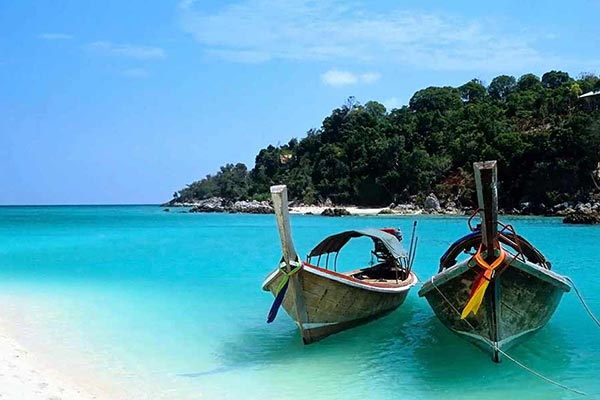
I got one of my IDC graduates in touch with a dive center in Koh Lipe, Thailand, where she worked for the season. After the season ended, she went back home for a few months and returned to Thailand for the next season, working on a liveaboard to the Similans. She built relationships with dive centers in Koh Lipe and before she left for home, dropped her resume off at several dive centers in Khao Lak (where dive centers running liveaboards to the Similans are located). So, for the second season, she had several job offers to choose from.
Another IDC graduate decided to take the freelance route. He traveled around the Philippines and did the odd course for several dive centers. For him, it was both an opportunity to travel and to find a dive center that ‘matched’ what he was looking for. Pretty soon, he found an island and a dive center that he loved and decided to stick around. Now he’s teaching courses and showing his students thresher sharks every day!
Some people are lucky and get to the best diving spots straight away. One of my graduates found a job in Komodo before the IDC was even completed—without my help. He did his Divemaster course in Komodo and used his time there to build relationships with many dive centers in Labuan Bajo. After a season of guiding and teaching, he decided that Komodo was not exciting enough (what!?) and he moved to work on a liveaboard to Raja Ampat.
There are many stories like this, and everybody has their own style and preferences. The key is to start somewhere, stay open to opportunities, and let your passion for diving guide your journey. Your adventure is waiting—all you need to do is take the first step.
You can read more stories from our IDC graduates here.
Best Locations for Traveling and Working as a PADI Instructor
Some locations in Asia are definitely better than others for instructors who want to work and travel. Here’s an honest rundown:
Thailand remains one of the easiest countries for instructor work. Koh Tao is the obvious choice; it’s the diving factory of Asia, with more instructor jobs than anywhere else. The downside is that you’ll be teaching big groups – factory style, and the diving is mediocre at best. Koh Lipe, Koh Chang, Khao Lak, and even Phuket are more relaxed options with much better diving, but also fewer job openings.
The Philippines is excellent for instructors who want variety. Puerto Galera, Moalboal, Malapascua, and Coron all have thriving dive industries with regular instructor positions available. The Philippines also tends to be more relaxed about work permits than some other countries, though you should still do things properly. The diving is world-class, and the cost of living is reasonable. The downside is that it a huge country with thousands of islands, so traveling takes time.
Indonesia offers incredible diving but can be more complicated for working legally. Bali (especially Amed, Tulamben, and Sanur) and the Gili Islands are the main hubs. The bureaucracy can be challenging, and work permits are harder to get. However, the diving is spectacular, and if you can navigate the admin side, Indonesia is an amazing place to work.
Malaysia is often overlooked but worth considering. Mabul (Sipadan), Tioman, and Perhentian Islands all have opportunities. Malaysia generally requires more formal work arrangements, but the country is well-organized, English-friendly, and professional.
Vietnam is the emerging option. Nha Trang and Phu Quoc are developing their dive industries, and there’s less competition for instructor positions. However, the market is smaller, and you’ll need to be more flexible about salary expectations.
Read more about “the best places to work as a diving instructor”

Important Things to Remember
Let’s talk about the practical (and sometimes boring) stuff that you absolutely need to handle properly.
Visas and Work Permits: This is crucial. Working on a tourist visa is illegal in every Asian country, and if you get caught, you could face deportation, fines, and a ban from returning. Yes, some dive centers operate in grey areas, and yes, some instructors work illegally. But if you’re serious about building a career, do it right.
Research the specific requirements for your destination, and make sure your employer is willing to handle the paperwork.
Professional Liability Insurance: As a PADI Instructor, you need professional liability insurance. This is not the same as diving insurance or travel insurance. Your Course Diector (me) can point you in the right direction. Don’t skip this.
Check if your local health insurance from home is valid in Asia. Most likely they will allow you to travel for a limited time. If this period is to short to cover your travel plans, you’ll need to get local insurance.
Taxes: Yes, you’re supposed to pay taxes on your income, even as a traveling instructor. This gets complicated depending on your home country’s tax laws, where you’re working, and how long you stay in each location. Don’t ignore this completely. At a minimum, understand your home country’s requirements for citizens working abroad.
Is It Sustainable Long-Term?
Let’s be realistic about money. Entry-level diving instructor salaries in Asia are not high. You’re probably looking at enough to cover your living expenses, have some fun, and save a little bit—but you won’t be getting rich.
The cost of living in most Asian diving destinations is reasonable, which helps. Accommodation is affordable, food is cheap, and you don’t need much beyond the basics. Many dive centers offer accommodation as part of your package, which significantly reduces expenses.
Your income will increase as you gain experience and additional certifications. Specialty courses, MSDT rating, and staff instructor rating will boost your earning potential and give you the opportunity to move into management positions. Instructors who commit to one location for multiple seasons often negotiate better arrangements with their employers.
Some instructors supplement their diving income with online work like English teaching, writing, web design, or other remote work. This hybrid approach can significantly improve your financial situation while still allowing you to work in diving. If you are coming from an office job, don’t burn your bridges. Doing some online projects for your old employer is a great way to boost your income.
The reality check: most instructors don’t do this forever. Many do it for 1-3 years as an incredible life experience, then transition to other careers. Some move into dive center management or ownership. A few idiots become Course Directors and make a long-term career out of it. And some return to their home countries and use their diving experience to work in the industry there. Your experience as a diving instructor looks great on your resume!
Even if it’s not your forever career, working as a diving instructor while traveling through Asia can be an absolutely worthwhile phase of your life. You’ll gain skills, confidence, incredible experiences, and stories you’ll tell your grand children.
How to Get Started
So what’s the actual first step?
Complete your IDC with a quality program. This matters more than you might think. Not all IDCs are created equal, and the preparation you receive will directly impact your success. Asia Scuba Instructors runs IDC programs throughout Asia that focus on making you a confident, capable instructor—not just someone who can pass an exam. We teach you the practical skills that dive centers actually need, and we support you before, during, and long after your course.
This is something that genuinely separates programs like ours from the cheaper, factory-style IDCs. We’re actively invested in your success as an instructor. We’ll help you find your first job, provide guidance on which locations suit your goals, and offer ongoing support as your career develops. We’re not interested in churning out certificates—we want to launch successful instructor careers.
Choose your first location carefully. Don’t necessarily go for the most exotic or beautiful destination. Go where you have the best chance of getting hired and learning the ropes.
Be ready to commit. When you approach dive centers, make it clear you’re willing to commit to a full season. Show up with all your documents organized, your professional appearance on point, and a genuine enthusiasm for the work. First impressions matter.
Stay flexible and open. You’re newly qualified, which means you’re still learning. Be willing to take feedback, adapt to different teaching styles, and do the less glamorous parts of the job (equipment maintenance, cylinder filling, shop duties). Instructors who are humble and hardworking get more opportunities than those who think they know everything.
Build your network from day one. The diving community in Asia is surprisingly well-connected, and stories go around quickly. Treat everyone professionally, maintain good relationships with fellow instructors, and build a reputation for reliability. Your network will be crucial for finding future positions and advancing your career.
The Bottom Line
Can you travel and work as a diving instructor in Asia? Absolutely. But it requires professionalism, commitment, and realistic expectations.
This isn’t a permanent holiday where you occasionally teach a course. It’s a real career that happens to take place in beautiful locations. The work can be physically demanding, the hours can be long, and the pay won’t make you wealthy. But if you approach it right, it can be an incredibly rewarding way to spend a few years of your life.
You’ll develop skills that extend far beyond diving—teaching, communication, problem-solving, cultural adaptability, and leadership. You’ll meet people from around the world. You’ll have experiences that most people only dream about. And you’ll be part of a global community of diving professionals.
The key is to be honest with yourself about what you want and what you’re willing to commit to. If you’re ready to treat it as a professional career, even if temporary, then this path is absolutely open to you.
Start with quality training, approach it professionally, commit to your employers, and build your reputation one course at a time. That’s how you make traveling and working as a PADI instructor in Asia not just possible—but genuinely successful.