Is it too late to become a scuba diving instructor?
If you’re over 50, have a career behind you, and are wondering whether the PADI Instructor Development Course (IDC) is realistic at your age — this interview is for you.
In the Candidates in the Spotlight series, we talk to our PADI IDC candidates about their experiences during and after the IDC. Our candidates come from all over the world and from all walks of life!
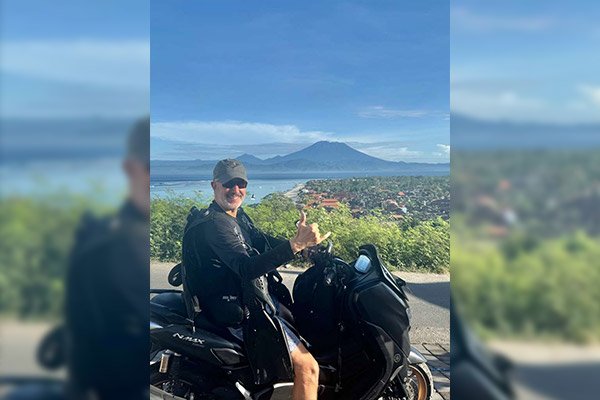
Gabriel spent 35 years working for the U.S. government and logged around 800 dives across the world before his wife suggested he turn his passion into a second career. At 59, he took early retirement, and completed a combined Divemaster and IDC program.
We sat down with him to talk about what he learned, what surprised him, and whether age was ever a factor.
Can you tell us a bit about your background — your professional life and diving experience?
I had been diving for 35 years, and had around 800 dives. I worked for the U.S. government for 35 years in various roles, and last year I took early retirement age of 59, and my wife suggested I become a dive instructor. So I did a combination rescue/divemaster/IDC program in Amed, Bali, which we had visited the year before. I spent 5-6 weeks on the DM course, and two weeks on the IDC. It was great to do them back to back.
Had you travelled to Southeast Asia before? How did you end up in Bali?
I had been to Myanmar and Thailand for work years earlier, and had done my first dive trip to Bali the year before, with my wife. We loved the Amed/Tulamben area in particular.
Why did you take up diving as a hobby, and what made you decide to become a diving instructor?
I took up diving because I saw a dive course advertised by the Pentagon Diving Academy in Washington DC, and signed up. The course was awful, it was taught by former military divers who just threw you in the water, and I’m not sure they spent more than 5 minutes on buoyancy control, but I knew that diving was for me pretty much immediately.
Can you jump straight into the dive instructor course (IDC) from any certification level? What did the training path look like for you?
In my case, I had been diving for many years, all around the world, in all kinds of situations (strong current, low visibility, cold water, surge, heavy seas, etc.). So for me the DM and IDC courses were much more about becoming aware of other divers than about learning how to dive.
Although I will say that I discovered that I could dive much more comfortably with very little lead. For decades I had been using 2-3 kilos more than I really needed.
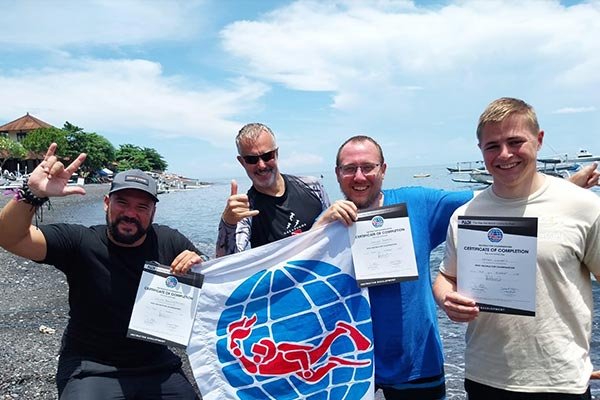
With your professional background and diving experience, what new things did you learn during the IDC?
I had done lots of solo diving, and was pretty much self-reliant and self-absorbed as a diver. Above all, I learned awareness of other divers, especially beginning divers – how they think and react, and how to communicate with them. Marcel was a fantastic IDC instructor, and really taught how to teach. That has paid off big time.
I’ve gone on dive boats where I helped beginning divers in a difficult situation, and got them comfortable, and the dive operators offered to let me dive free whenever I want on their boat, in exchange for keeping an eye out on their inexperienced divers. I’m taking full advantage of that. I’m not sure if I’ll ever become a full-time instructor, but I’m teaching/guiding on a freelance basis, and that’s great.
How did it feel to be back in a classroom setting alongside much younger fellow students?
It was fun. I didn’t feel that age was a factor at all.
The IDC is not cheap. At this stage in your life, what’s the biggest value it offers?
The IDC is not cheap, but compared to doing a week’s liveaboard somewhere, it’s not that expensive either. And doing the IDC in Amed, where the cost of living is so low, meant that I could spend two months in Bali doing a combination DM/IDC course for about $5,000, including 80 dives total.
That was about what it would cost to spend one week in a liveaboard in the Socorro Islands or in the Galapagos.
What’s the one thing you wish you’d known before starting?
The importance of Instagram. Social media, and Instagram in particular, is essential to start developing a profile as a diver, that potential students and dive shops can see to get an idea of you.
What would you say to someone your age who’s thinking about making the same leap?
It’s never too late. Carpe diem.