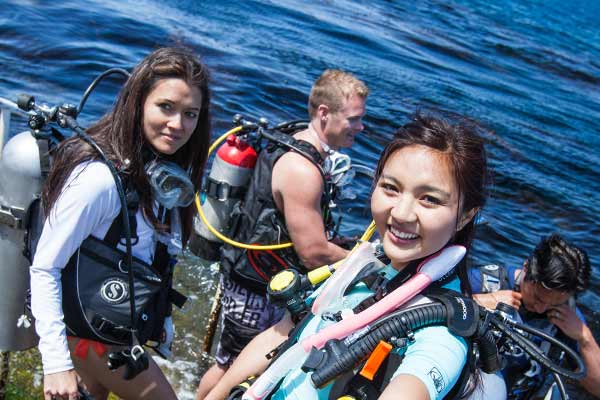

Thailand is one of the most popular places in the world to do your Divemaster course. Warm water, low costs, and dive centers everywhere. But not every location is the same. What is the best place in Thailand to do your Divemaster course?
I have been working as a diving instructor in Thailand for over 20 years, so I know the islands and I know the dive centers from the inside. My opinion is completely biased, but I’ll give you my honest take.
This is an unfiltered overview of the most popular locations in Thailand to do your Divemaster course. Not just the diving and the lifestyle, but training quality and what it means for your career afterwards.
Koh Tao
Koh Tao is probably the first place that comes to mind. The island has been a diver training hub for decades and has a very high concentration of dive centers. Prices are low, and competition between dive centers keeps them that way.
Diving
The dive sites work well for training, but have suffered badly from hordes and hordes of beginning divers. The famous sites you see on social media, like Sail Rock and Chumpon Pinnacle, are far away and shared with dive centers from Koh Samui and Koh Phangan too. In high season, it will be overcrowded there too.
Lifestyle
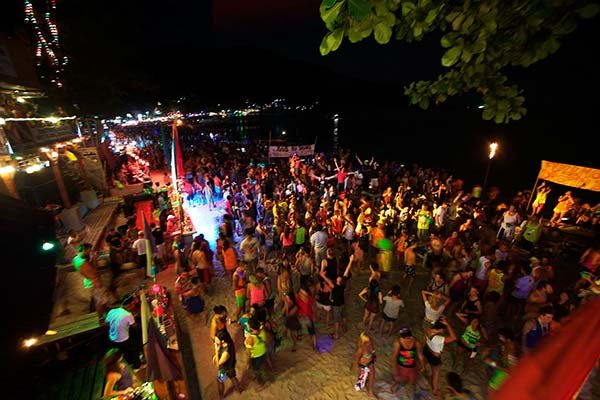
Koh Tao has a lively party scene and a strong backpacker community. If you want to meet lots of like-minded people, enjoy beach bars and late nights, and soak up the island atmosphere, Koh Tao is great. There are also quieter corners and beautiful viewpoints for those who prefer a more relaxed pace.
Training Quality
This is where it gets complicated. Because there are so many dive centers, quality varies a lot. Some run excellent divemaster programs with real structure and experienced staff. Others push large numbers of candidates through quickly. The volume of dive students on the island means that some centers simply do not have enough time for each individual.
A typical schedule at busier centers: two short dives in the morning, dragging open water students who have not been taught buoyancy control through the water. Quick debrief in the dive center, repeat in the afternoon.
There are good dive centers too, but you need to find them. Ask specifically how many students they run at once, who supervises your divemaster course, and what the daily schedule actually looks like.
After the Course
Job opportunities on Koh Tao itself are competitive. There are many divemasters looking for work, and not enough positions to go around. Expect to volunteer or work for low wages at first if you want to stay on the island.
That said, Koh Tao is one of the few places in Thailand where you can actually work as a Divemaster. Work permits for divemasters are technically not available in Thailand, but enforcement on Koh Tao is ‘more relaxed’ than in the rest of Thailand.
The reputation of Koh Tao carries both ways. It’s a hugely popular place to get trained. However, many dive center managers in Southeast Asia know the factory-style courses and the party culture, and they actively avoid hiring staff trained there. That is not a universal rule, but it is something to be aware of.
In short
Mediocre diving at best. Great for a gap year experience, party, and meeting people. Less ideal if you are serious about your diving career.

Phuket
Phuket is Thailand’s largest island and the main entry point for international tourists. The experience here is completely different from Koh Tao.
Diving
The diving around Phuket is varied. Local sites like the King Cruiser wreck and Shark Point are genuinely interesting. The Racha Islands, Racha Yai and Racha Noi, are the most visited spots and offer easy diving with good visibility. Some areas in Phuket even offer beach diving. The main thing to keep in mind is the season. The Andaman Sea has a pronounced low season from May to October, when dive operations slow down significantly.
Lifestyle
Phuket is a busy, commercialized tourist destination. It has excellent infrastructure, international food, easy transport, and an international airport. If you want comfort, Phuket is great. If you want a quiet tropical island atmosphere, Phuket will disappoint you. Although areas like Rawai or Kamala offer a more relaxed atmosphere than the main tourist strips.
Training Quality
Dive centers in Phuket tend to be larger and more professionally run. Many cater to higher-end customers and maintain higher standards as a result. Groups are generally smaller, schedules are more relaxed, and there is less pressure to rush through dives.
One thing to watch out for: some smaller centers in Phuket act more as booking offices than real dive operations. They do not have their own boat or a fixed team of instructors. Look for a center that runs its own boat, has a fixed instructor team, and ideally offers beach diving as well.
The smooth logistics of well-run Phuket centers mean you may do less of the divemaster grunt work, like washing equipment and filling tanks. That sounds like a bonus, but it is an experience you may miss when you move to a smaller dive center somewhere else.
After the Course
Phuket has a strong and consistent dive industry, with plenty of opportunities for professionals with a professional attitude. Keep in mind that Thai work permit regulations are enforced strictly here, which means working as a divemaster is not a realistic option in Phuket. You will need your instructor rating to work legally.
If the touristy feel of Phuket does not suit you, nearby locations on the Andaman coast, like Koh Lanta, Krabi, and Koh Lipe, all offer solid opportunities. Khao Lak, just north of Phuket, is the departure point for liveaboards to the Similan Islands, the most famous diving destination in Thailand.
In short
A busy tourist location but also a professional environment with real career prospects. Better training than Koh Tao in many respects, but you need to choose your dive center carefully.

Koh Phi Phi
Phi Phi is one of the most photographed places in Thailand. Limestone cliffs, turquoise water, and an atmosphere that never quite sleeps.
Diving
The dive sites around Phi Phi are genuinely beautiful. Koh Bida Nok and Koh Bida Nai are the most famous, and there you can see sharks, turtles, diverse coral, and plenty of fish. Conditions and visibility can vary, but in my honest opinion, the diving here is significantly better than on Koh Tao. Phi Phi dive centers also visit less crowded sites that most tourists never see.
Lifestyle
Phi Phi is small, lively, and social. Outside of diving and the beach bar scene, there is not a great deal to do. Some people find that perfect. Others start to feel trapped after a few weeks, especially during high season when the island gets very crowded.
Training Quality
There are only a handful of dive centers on Phi Phi, so choices are limited. Not all shops have a good reputation, but the ones that do run solid programs. The varied conditions and ‘easy to navigate’ dive sites make Phi Phi a genuinely good place to develop your divemaster skills.
Many Phi Phi dive centers depend on walk-in bookings, so expect to spend evenings in the shop selling diving. Check how individual centers handle this before you book your course.
After the Course
The job market on Phi Phi itself is small. Most divemasters use it as a stepping stone to their instructor course. IDC opportunities on Phi Phi are very limited, but Phuket is nearby and offers a wide choice of IDC’s. The experience of diving more challenging sites is a genuine asset when applying for work elsewhere in Thailand.
In short
Beautiful diving and a lively atmosphere, but it can feel small and crowded. Limited options for the course itself, and a limited local job market, but the diving experience you gain is solid.
Koh Chang
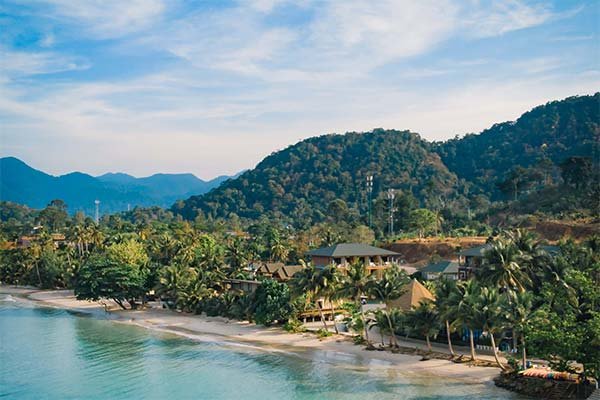
Koh Chang is in the Gulf of Thailand, close to the Cambodian border. It is quieter, greener, and far less crowded than Koh Tao or Phuket.
Diving
The diving around Koh Chang is underrated. There are several wrecks in good condition, including the HTMS Chang, one of the largest diveable wrecks in Southeast Asia. Reefs are healthy, but visibility can vary. The sites are not as spectacular as the Andaman, but they are consistently interesting and rarely crowded.
Low season runs from May to October, conditions can get unpredictable, and the island gets very quiet.
Lifestyle
Koh Chang has a relaxed pace. Good restaurants, a genuine local feel, and enough space that it does not feel claustrophobic. National park status means development is more controlled than on most Thai islands. If you want to go off the beaten track, Koh Chang is a great choice.
Training Quality
The smaller number of dive centers is actually an advantage for training. Candidates get more personal attention and more time in the water. Programs are not overwhelmed with students, which means the quality of supervision is higher. Because dive centers in Koh Chang train far fewer divemasters than those on Koh Tao, you are far more likely to get instructors who are genuinely invested in your progress.
The wreck diving here gives divemasters a real specialty. Assisting on wreck dives requires structured briefings, careful supervision, and clear communication underwater. That is valuable experience regardless of where you work afterwards.
After the Course
The local job market is small but real. More importantly, the quality of experience you gain makes you a stronger candidate for positions elsewhere.
In short
Unspoiled dive sites, personal attention, and a relaxed lifestyle. Less name recognition, but a stronger foundation than many better-known locations.
Koh Lipe
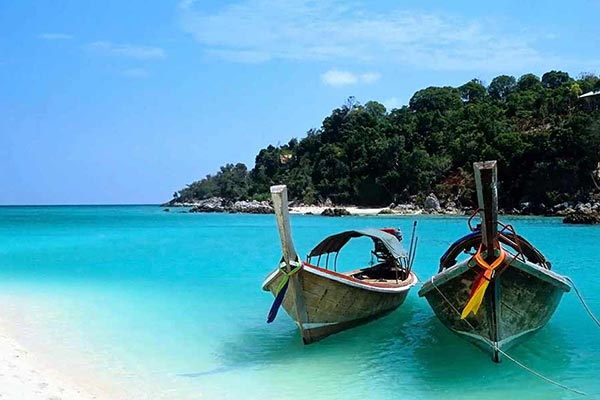
Koh Lipe is a small island near the Malaysian border in the far south of Thailand. Part of Tarutao Marine National Park, it has some of the best diving in the country.
Diving
This is the strongest argument for Koh Lipe. The reefs here are in excellent condition. Visibility is frequently over 20 metres. Sharks, rays, and a diversity of marine life that is genuinely hard to match elsewhere in Thailand, apart from the Similan Islands. If diving quality is your top priority, Koh Lipe is one of the best choices in the whole country.
Lifestyle
Koh Lipe has a small but pleasant community. It is not a party island. The pace is slower and more focused on nature. Getting there takes some effort, with ferry connections from the mainland or Langkawi in Malaysia.
Training Quality
There are only a few dive centers on the island. The ones that run divemaster programs tend to offer longer courses than anywhere else, simply because they are not processing high volumes of students. The quality of diving itself means candidates accumulate genuinely impressive experience during their training.
One important consideration: Koh Lipe has a low season that effectively shuts down dive operations from May to October. Timing your course around this is essential.
After the Course
Job opportunities on the island itself are limited, though local dive centers prefer hiring divemasters who already know the reefs. And if you are ready to move on to your next job or your instructor rating, diving hubs like Phuket and Khao Lak are close.
In short
Great diving and a relaxed island atmosphere. Divemaster courses here tend to run longer than average. The island is remote and only accessible during high season. An excellent choice if you want to get off the beaten path and can time it right.
Khao Lak
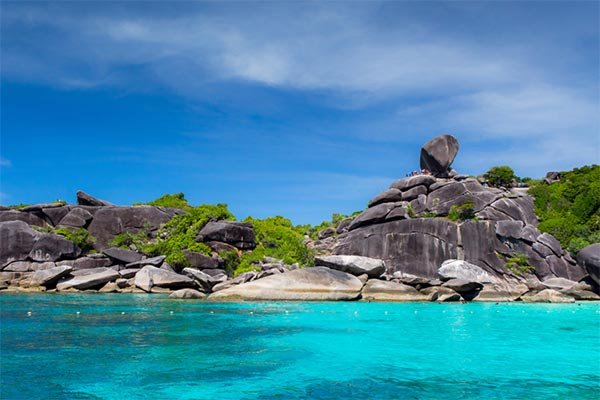
Khao Lak is not an island. It is a coastal area north of Phuket on the Andaman coast, and it is the primary departure point for liveaboard trips to the Similan Islands.
Diving
Local diving around Khao Lak is decent but not exceptional. The real draw is access to the Similans. The Similan Islands are consistently ranked among the best dive destinations in the world. During liveaboard trips, divemasters get exposure to pristine reefs, strong currents, deep dives, and large pelagic species.
Lifestyle
Khao Lak is low-key and uncrowded. It has a local feel that is quite different from Phuket. Good restaurants and accommodation, but not a party destination. If you want to focus on diving without distractions, this suits you well.
Training Quality
Khao Lak is the main departure point for liveaboard trips to the Similan Islands, and some dive centers here will include divemaster candidates on those trips. That kind of experience is hard to find elsewhere. However, not every center does this.
Larger liveaboard operations focus on their paying guests, and training divemasters is not a priority for them. Local shore diving is limited and not particularly impressive. Ask specifically whether you will join liveaboard trips before committing to a course here.
After the Course
The liveaboard industry is the main opportunity here, but positions on liveaboards are limited, and an instructor certification is often required. On the positive side, training here means you can build a network of contacts for the future.
In short
A good starting point if a liveaboard career is your goal. But do your research, or you may be disappointed.
Koh Lanta
Koh Lanta sits between Krabi and Koh Lipe on the Andaman coast. It is a much larger island and has a more relaxed atmosphere compared to Phi Phi.
Diving
Koh Lanta Dive centers often dive Phi Phi but also have access to some excellent sites, including Koh Haa, and Hin Daeng / Hin Muang, where Whale shark sightings are not uncommon at the right time of year. Local sites around the island are not spectacular but solid for training.
Lifestyle
Koh Lanta has a genuinely pleasant atmosphere. Popular with families and people looking for a calmer experience. The west coast has a long stretch of beach with good restaurants and accommodation. There is not much nightlife here, which many people see as a pro rather than a problem.
Training Quality
There are fewer dive centers on Koh Lanta than on Koh Tao or Phuket, but several run solid programs. Access to sites like Hin Daeng during training is a real advantage, but don’t expect to go there every day. Managing groups in stronger currents is a skill that sets divemasters apart, and you can develop that here.
After the Course
The local job market is limited. However, similar to Koh Lipe, real diving hubs like Phuket and Khao Lak are close.
In short
Good diving, relaxed atmosphere, and useful experience. Less choice of dive centers and fewer career opportunities than elsewhere. A solid choice if you want a quieter environment without sacrificing diving quality.
There Is No Single Best Location
Every location on this list has something real to offer. The right choice depends on your personal preferences and your ambitions.
What matters most is not the location itself. It is the quality of the dive center and the commitment of the instructors running your program. I recommend not booking your course online. Make a shortlist of locations and dive centers. Visit the dive centers before you decide. Have a chat with the management, the instructors, and other Divemaster students if possible. Then make your final choice.
The right choice can be the difference between enjoying your course or struggling through it, between learning from people who care or feeling neglected, between a solid start to your career or spending your first few years just trying to catch up.
Frequently Asked Questions
How long does the PADI Divemaster course take in Thailand?
Most programs take between 3 and 5 weeks, depending on how quickly you accumulate dive experience and how the center structures the program. Some places run longer internships. That is not always a good thing.
Do I need to speak Thai to do a divemaster course in Thailand?
No. English is the working language across the Thai dive industry. Most dive centers in tourist areas operate entirely in English.
Is Thailand a good place to do a divemaster course if I eventually want to work elsewhere?
Yes. A PADI certification is recognized worldwide. You can find work in the Maldives, Indonesia, the Red Sea, the Caribbean, and beyond. The diving experience you gain matters, but the certification itself travels with you.
What is the difference between the Andaman Sea and the Gulf of Thailand for diving?
The Andaman Sea generally has better visibility and more impressive reef diving, particularly around the Similans and the southern islands. The Gulf of Thailand has different marine life but is often calmer. Both are good for training.
Can I do my divemaster course year-round in Thailand?
Most locations have a high season and a low season. The Andaman coast is best from November to April. The Gulf islands dive year-round, though conditions vary. Always check with the dive center about timing before you commit.
Is the divemaster course the same everywhere?
The PADI standards are the same regardless of where you take the course. But there can be a huge difference in the quality of instruction, the type of courses that you’ll assist with, and the type of customers that you’ll encounter.
Do I need my own equipment?
Most dive centers can provide equipment if needed. Keep in mind that as a diving professional, you are expected to own your own gear. Many students choose to buy it during the course, when they can get advice from their instructor and access discounted deals through the dive center.
Will I get a job after the course?
There are no guarantees, but qualified divemasters with a good attitude can find work or at least work experience.
Keep in mind that in most Asian countries, getting a work permit as a divemaster is not possible. This is why many divemasters continue to instructor level.