
Most people start their PADI Divemaster course because they love diving. Many never work as a Divemaster for long, and some never work as one at all.
That doesn’t make the course a waste.
Divemaster is the first level of professional diving. Unlike your first job in an office or a factory, you get real customers, real decisions, and real responsibility. You learn skills most people never pick up in a first job, and you’ll use them for the rest of your life.
Standing up in front of a group
Briefings are part of every dive day. During your course you’ll give many briefings to groups of strangers, and your instructor helps you sharpen each one.
You learn what to leave out, what order people need things in, and how to check they actually understood. Within a few weeks you can explain a dive plan clearly in five minutes.
As an office intern, you might present once or twice, if you’re lucky. On a Divemaster course you speak in front of a group almost every day. That practice makes you confident talking to people anywhere.
Reading people before they say anything
A nervous diver rarely tells you they’re nervous. They go quiet on the boat, fiddle with their gear, check it three times.
The overconfident ones are just as easy to miss. They skip the buddy check and tell you they’ve done this dive before.
Most internships keep you behind the scenes, away from customers. Here they’re in your face from the moment they step on the boat, and you learn to spot both types before anyone hits the water.
That skill carries over to every customer, colleague, and team you’ll ever work with. People rarely say what they’re thinking. You’ll learn to notice anyway.
Staying calm when something goes wrong
A guest’s mask floods halfway through the dive, and you can see their eyes go wide. Panicking does not help. A calm, practised response does.
The Divemaster course sharpens your problem-solving skills. You’ll learn to handle unexpected situations, not just follow a checklist.
When something goes wrong in an office or a factory, the intern calls the supervisor. On the boat, you’re part of the response. And that calm doesn’t switch off on land.
Taking responsibility
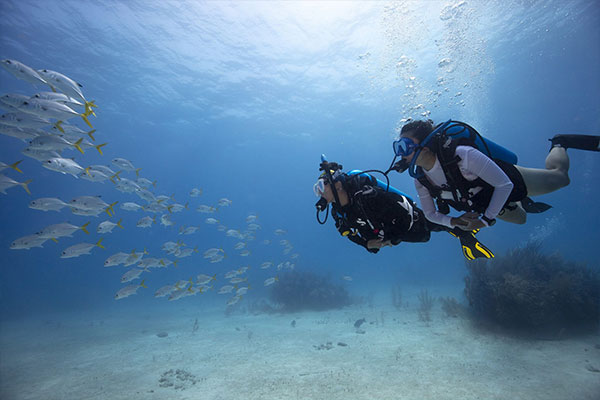
As a recreational diver, you look after yourself and your buddy. As a Divemaster candidate, you count heads, check air, watch the whole group, and keep an eye on the one at the back who keeps drifting off.Divers don’t always follow safe diving practices. You make sure they do.
Few internships make you responsible for other people’s safety, 18 meters below the surface. This one does.
Using your authority the friendly way
You’re 24, and the guest gearing up next to you is a 60-year-old surgeon with 300 dives in their logbook. They’ve just skipped the buddy check. You still have to remind them.That takes some nerve the first time. But you learn to say it in a way that keeps the guest on your side. Light, clear, and without making them feel like a beginner.
An office intern rarely gets to tell a senior client what to do. Here it happens every day, and you learn that authority works best when people hardly notice you’re using it.
Changing the plan because the ocean changed it
You briefed a gentle drift along the reef. Then the current picks up, visibility drops to five meters, and the swell starts building.The plan is gone. You need a new one, with a boat full of people watching you decide.
In a factory, the plan for the day is set before you arrive. Out on the water, it can change in ten minutes. You learn to read conditions, make a new plan fast, and adapt without any drama. Later, when a project or a job changes under you, you’ll recognise the feeling.
People copy what you do, not what you say
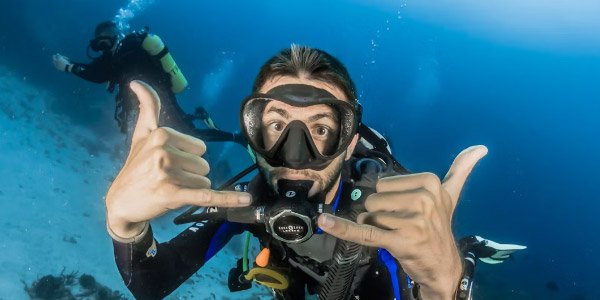
Guests watch you all the time. Your buoyancy, your trim, how you handle your gear, whether you touch the reef.
If you hang off the mooring line, they will too. It doesn’t matter what you said in the briefing.
In most first jobs, you learn by watching others. Here, others are watching you. That’s leading by example in its most direct form.
Working in another culture
Many people do their Divemaster course far from home. You work with local boat crews, staff from different countries, and guests from all over the world, often without a shared first language.
Most internships happen close to home, with people who speak your language. Here things work differently. Timing, communication, what’s polite and what isn’t.
You learn to get things done anyway, with patience and a sense of humour. That adaptability goes with you wherever you work next.
Summary
The Divemaster course teaches you to guide divers. But what you really take home is bigger than that. You’ll speak in front of groups every day, read people before they say a word, and stay calm when a dive doesn’t go to plan. You’ll learn to take responsibility for others, use your authority without losing the customer, and adapt in a culture that isn’t your own.
An internship gives you a line on your CV. A Divemaster course gives you skills you’ll use for the rest of your life. Whether you end up guiding dives for years or never put on a wetsuit again, it’s one of the best investments you can make in yourself.
This article was written by Marcel Jansen, PADI Course Director and founder of Asia Scuba Instructors. Marcel has been in the diving industry for over 20 years, teaching across Thailand, Indonesia, the Philippines, the Maldives, and Malaysia.
He runs PADI Instructor Development Courses across Asia and has strong views about how this industry trains its people.
Follow Marcel on social media:
https://www.facebook.com/asiascubainstructors
https://www.instagram.com/asia_scuba_instructors