

Small commitments that turn online enquiries into bookings
The one who got away
A customer walks in to ask about a course. You explain the course options, prices, all the wonderful marine life. An hour goes by. The customer says, “Thank you so much for all the info. I’ll think about it.” And you never see him or her again. What went wrong? The info was solid, the enthusiasm was real, the price was fair. So what actually happened in that hour that let them walk out unconvinced?
Nobody wants regrets
People don’t like making decisions. Not because they’re lazy. They fear making the wrong decision and regretting it later. Better to walk out and think about it.
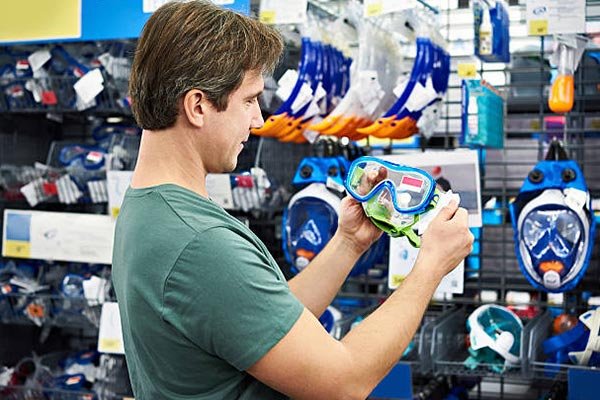
Give somebody 50 masks to choose from, and they won’t make a decision. The odds of making the wrong decision feel enormous. It’s better to choose one for them (with them) and put it in their hands. Now, handing it back to you seems like a decision they may regret.
Closing the sale
So how do you help someone actually decide? One of the most important steps in the sales process, and the one that most dive center staff skip entirely, is the close. If you never ask someone to decide, they won’t. It’s that simple.
But closing doesn’t mean turning into a used car salesman. Nobody needs to hear “So, are you booking or not?” You can ask for a decision in a friendlier, softer way: “When would you like to start?”, “Does becoming a certified diver sound good to you?” Soft questions, real questions that actually ask for a decision instead of dancing around it. By the way, asking for a “no” is easier than asking for a “yes.” “Would it be a crazy idea to start tomorrow?”
Booking customers online
Selling face to face is hard enough. Selling to someone online is harder still. When booking customers online, it’s even more difficult to get some commitment. You send them all the info, prices, and details, and they simply ghost you. Like saying “thanks for the info” and walking out of the dive center, but even easier.
This is where the mask trick comes back into play, just without the mask. By putting the mask in their hands, your customer no longer fears choosing the wrong one. They fear regretting giving it back.
In sales, this is called the endowment effect. Creating some psychological commitment, or involvement, turns fear of making the wrong decision into fear of losing out.
How does this work online?
You can’t put a product in someone’s hands when booking a customer online. But you can still create some psychological commitment, or build the same feeling of “this is already a little bit mine, and I may regret giving it back.” You just need different tools.
Send them a detailed dive schedule with their name already on it. Photos of the group that was diving last month, so they can picture themselves on that boat. An introduction to other divers who already signed up for the trip. This all creates a feeling that they’ve already committed a little.
Small choices work the same way. “We’ve still got spots on March 1st or March 20th, which one suits you?” It’s not a yes-or-no question. It’s a decision about which date, and picking one means they’ve already made a commitment. They just haven’t noticed yet.
And don’t underestimate small, physical tasks. Ask them to send a photo of their logbook. A voice note about why they want to do this course. It feels like the “task” of booking this trip has already started, and most people don’t like leaving tasks uncompleted.
How to avoid getting ghosted
Simply not answering a message is even easier than walking out of the dive center. Again, the endowment effect plays a big factor. People respond when they fear missing out on something. Creating a sense of urgency motivates people to respond. Every booking website on earth knows this. That’s why on booking websites you always see “only 2 rooms remaining at this price.”
The other, even better way to get a response is to offer a reward. Asking a customer to do something for you will most likely not get you a response. But “Would you like to receive something?” works a lot better. Not responding will mean missing out on this offer.
PADI figured this out a long time ago. Free introductions to eLearning exist because giving something away gets a reply that asking never will. Sending 5 messages saying “Have you already decided?” will probably not get you a response. But “If you’re still serious about doing the OWC, I can send you a free introduction” will work a lot better.
Wrapping it up
None of this is a trick, really. It’s just paying attention to how people actually make decisions, instead of assuming they’ll get there on their own. They won’t. Most customers need a small nudge, not a hard sell. Give them something to hold onto, a date to pick, a name on a schedule, a voice note to send, and they’ve already started saying yes without realizing it.
Why selling is part of our IDC
Most IDCs don’t give this much attention, or skip it almost entirely. In our IDCs, we don’t.
Teaching according to PADI standards is something you learn in every IDC. Ask dive center owners or managers about the skills they’re looking for in their instructors, and they will mention many others: social skills, selling skills, teaching skills.
We don’t only prepare people to pass the exam. We’re preparing them to become great instructors, and selling is one of the many skills that make our instructors valuable staff for dive centers.
This article was written by Marcel Jansen, PADI Course Director and founder of Asia Scuba Instructors. Marcel has been in the diving industry for over 20 years, teaching across Thailand, Indonesia, the Philippines, the Maldives, and Malaysia.
He runs PADI Instructor Development Courses across Asia and has strong views about how this industry trains its people.
Interested in becoming a dive professional? Find out more at asiascubainstructors.com.