Why our PADI IDC is student-centered, built around the skills you need, not the skills your Course Director has.
I recently saw a post from an IDC showing candidates how to count underwater. The hand signals for the numbers, counting to 10 and beyond on one hand. Lots of likes, lots of shares. But it got me thinking. What are they actually preparing these candidates for?
Twenty years of mostly useless skills
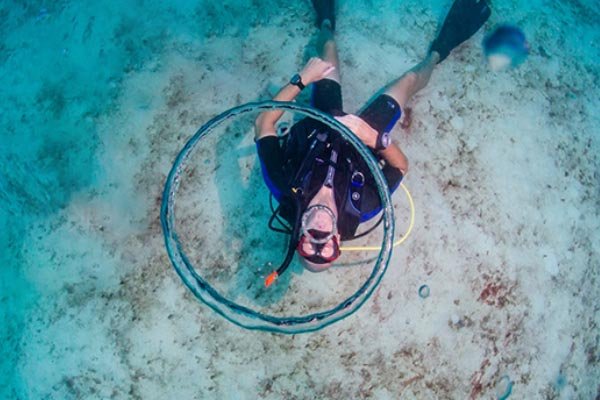
In 20+ years of diving, I’ve picked up a lot of useful skills. And a few completely useless ones too. I know how to blow bubble rings underwater, but it’s not something I teach in my IDC. You don’t need it to become a good diving instructor.
Our IDC isn’t about showing off my skills and knowledge. It’s about you, showing off yours.
Standards keep getting shorter. Content shouldn’t.
Here’s something many candidates don’t realize: the minimum length of a PADI IDC has gotten shorter over the years. You can run a PADI IDC in six days now if you want to.
Most Course Directors run a 10 or 12 day IDC. So what are they teaching in those four to six extra days? Their own tricks and preferences? Whatever they happen to know that feels impressive? I’m sure some of this is very useful. But it puts the wrong person at the center of the course.
Our IDC is student-centered, not teacher-centered. It’s not built around what I know or what I can do. It’s built around what you need to know and the skills you need to become a great diving instructor.
Passing the Instructor Exam
In every IDC you’ll learn how to teach to PADI standards. And honestly, that’s all the PADI examiners can realistically check during the Instructor Exam. Six days is plenty of time to learn that, and the extra time often goes into polishing “teaching to PADI standards” even further. Demonstrations look like poetry. Candidates catch every mistake and point at their nose at exactly the right moment. Great for passing the exam, but not much use when you’re teaching in real life. Think of it as polishing your car for the showroom instead of preparing it for a road trip.
Our IDC also runs 12 days, and we use our extra days to prepare for the road trip. You’ll still learn to teach to PADI standards, and your demonstrations will be good enough to pass the exam. But most of the extra time goes to preparing you for your first real courses, where students don’t always get it right the first time. Why they’re struggling, what’s causing it, and how you help them get past it.

Some examples
If you do your IDC with us, you won’t learn the hand signals for 7 or 8. And you won’t learn to point at your nose when a student can’t clear their mask. You’ll learn to figure out what went wrong: why this particular student can’t clear their mask, and how to adjust your approach for them.
We’ll also talk about teaching buoyancy control. How to recognize what divers are doing wrong, and which tips will actually help them improve. That’s my version of “extra content,” and I think you’ll find it worth your time.
By the end of the course, you’ll be ready to pass your exam. That matters, of course. But more importantly, you’ll feel ready to teach your first course.
A student-centered IDC
Everybody comes to the IDC with a different background. Some candidates finished their Divemaster a year ago and have been guiding every day since. Others have hundreds of dives but haven’t looked at dive theory in years. Some are nervous about standing in front of a classroom, while others have been doing presentations in a completely different job for a decade.
That’s why our IDC doesn’t have a fixed program. We keep our groups small, so we can see where each candidate stands and adjust the course to fit. Need more help with theory? We’ll work through it with you. Struggling with a specific skill? We’ll get back in the water and practice it until it’s solid.
Nobody gets pushed along to keep the group on schedule, and nobody sits through lessons they don’t need.
If you’re still not 100% sure
Some new instructors want a bit more support before going solo, and that’s completely fine. We offer pretty unique co-teaching options, where you team up with an experienced instructor and run your first few courses with someone watching over your shoulder. It builds your confidence, and it tends to open doors when you’re looking for a job.
And by the way, if you can’t find a job on your own, we’ll help arrange one.
This article was written by Marcel Jansen, PADI Course Director and founder of Asia Scuba Instructors. Marcel has been in the diving industry for over 20 years, teaching across Thailand, Indonesia, the Philippines, the Maldives, and Malaysia.
He runs PADI Instructor Development Courses across Asia and has strong views about how this industry trains its people.
Interested in becoming a dive professional? Find out more at asiascubainstructors.com.