
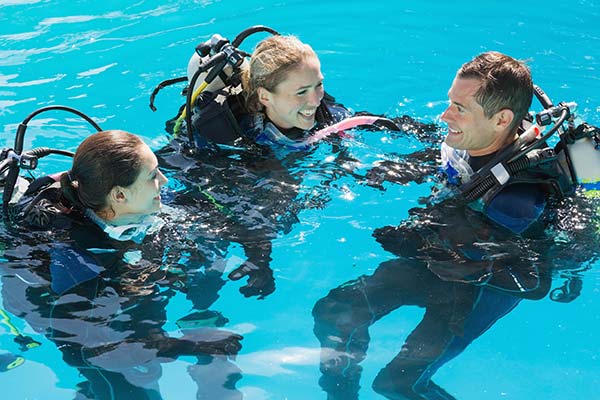
Ask any course director what makes a good instructor, and patience comes up almost immediately. It is the one thing everybody tells you a great instructor should have, and it gets mentioned in nearly every PADI IDC classroom. And yet almost nobody explains what patience actually looks like when a student has failed the same skill three or four times in a row.
Patience Is Not the Same Thing as Tolerance
Sitting through five failed attempts without visibly losing your temper is not patience. It is tolerance, and that gets confused with patience constantly. Tolerance keeps a session calm. It does not fix anything. A student can fail the same way ten times in front of an instructor who never once raises their voice, and the outcome is still a failed skill.
The kind of patience that actually changes an outcome is aimed at helping a student to master a skill, not just waiting it out and hoping the tenth attempt goes better than the ninth. Patience is more than managing your own frustration. It’s spotting the pattern behind a repeated mistake and knowing how to break it.
A Good Instructor Changes the Approach, Not Just the Pace
A common response to a failed attempt is to run it again, only slower and with more encouragement. Sometimes that works. Often you’ll just see the same mistake repeated.
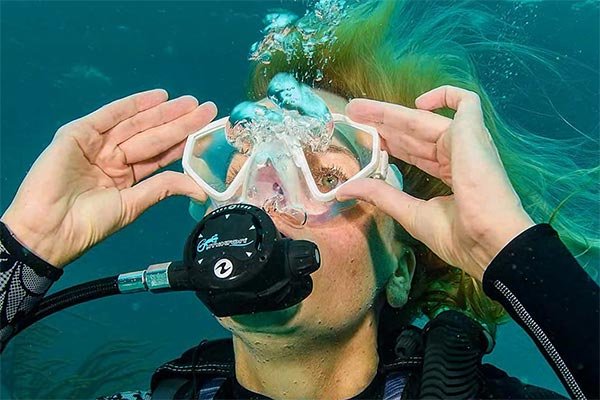
A stronger response is changing the method itself. If a verbal explanation is not landing, show it instead. If showing it is not landing, break the skill into smaller steps and build from there. If a student has problems clearing their mask, try the motion without water in the mask first, or even let them show you the skill on the surface. Being able to teach is one thing. Being able to teach the same skill in three or four different ways, depending on what the student in front of you actually needs, is what separates good instructors from average instructors.
Recognising What Is Actually Going Wrong
Every instructor can spot a diver who’s struggling with buoyancy control. Not many can say precisely what is happening, and why. That distinction matters.
Some divers are overweighted and compensate by constantly kicking or sculling. Others hold their breath instead of using their breathing to fine-tune their buoyancy, relying only on their BCD. Each of these problems needs a completely different correction. Simply handing your student an extra weight, or patiently dragging your student down for the 5th time, does not teach them anything.
This is the part of teaching that is not taught in most IDCs. Recognising the cause behind a problem takes practice, and it takes a different kind of patience. The kind that analyses a problem before offering an easy solution.
Keeping it fun on the Fifth Attempt
A student who fails the same skill five times is not just dealing with a skill anymore. They are also dealing with embarrassment and motivation. They may start to wonder whether they actually want to learn this or not. An instructor who lets that tension build makes the sixth attempt harder than the first one ever was.
Keeping the mood light on attempt five is a teaching skill in its own right, not just a personality trait some instructors happen to have. A bit of humour, and genuine positive feedback about what the student did correct, means treating a failed attempt as a normal part of learning rather than a setback. All of that keeps a student willing to try attempt six instead of quietly deciding diving is not for them.
What This Looks Like on a PADI IDC
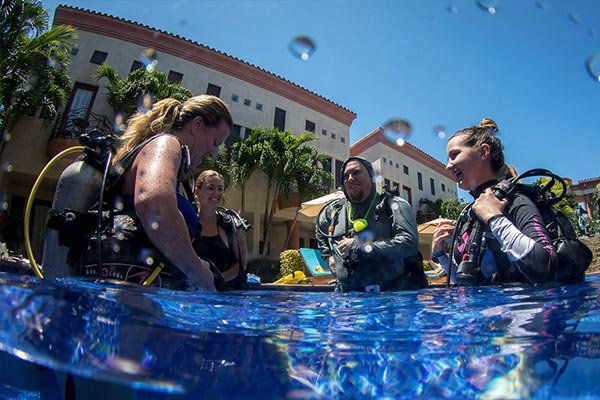
This is one of those areas that separates a great PADI IDC from an average course. In most PADI IDCs you’ll learn to ‘catch the problem’. You make a quick hand signal underwater, and magically the student does it correctly next time. No discussion about what open water students often get wrong, how to recognise this, and how to handle these situations.
Co-teaching after the IDC helps to gain experience. You’ll get to practice working through real problems, with an experienced instructor watching your back and helping you see what you missed. Don’t just accept being told to be more patient and hope that your students will get it right at some point.
None of this shows up on the instructor exam in a way that can be scored. The exam checks whether you can demonstrate a skill, brief it, and teach it to the standards. What it does not check is whether you can tell the difference between a diver who is overweighted and one who is holding their breath, or whether you can keep a student smiling on their fifth attempt at a skill instead of their first.
For anyone deciding where to become a dive instructor, that is worth asking about directly, because it is the difference between working these things out during your first courses or being a great instructor from the start.
Summary
In short, patience is not the same skill as tolerance. Sitting through repeated failures calmly doesn’t teach a student anything on its own. Real patience is active: it means taking the time to understand why a student keeps making the same mistake, and adjusting how you teach it rather than just running through it again the same way. It also means paying attention to how the student feels, not just what they’re doing wrong, and keeping things light enough that a fifth failed attempt still leaves them wanting a sixth.
This article was written by Marcel Jansen, PADI Course Director and founder of Asia Scuba Instructors. Marcel has been in the diving industry for over 20 years, teaching across Thailand, Indonesia, the Philippines, the Maldives, and Malaysia.
He runs PADI Instructor Development Courses across Asia and has strong views about how this industry trains its people.
Interested in becoming a dive professional? Find out more at asiascubainstructors.com.